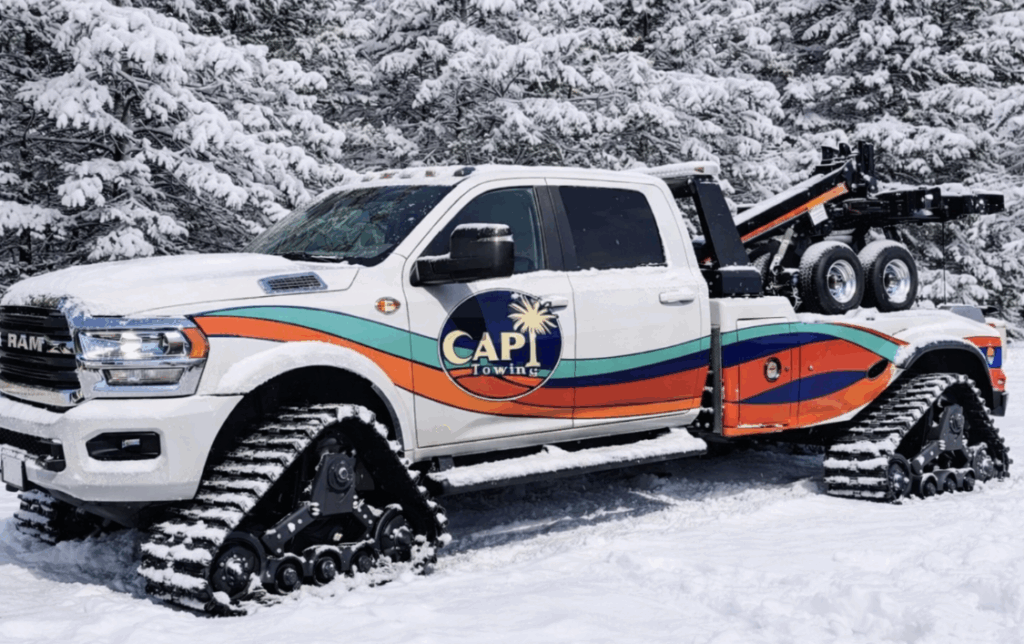
As winter weather intensifies, CAP Towing is committed to keeping drivers safe on the road. With 2026 seeing unpredictable shifts in cold weather, winterizing your vehicle is no longer optional, it’s a safety requirement. Searching for a towing company open now, call CAP Towing. This guide outlines the essential steps for winter preparedness, specifically optimized for the needs of modern cars and heavy duty trucks.
Why Winter Preparedness Matters
Cold weather affects mechanical systems differently. Fluids thicken, battery chemical reactions slow down, and tire rubber hardens. Proactive maintenance prevents the need for emergency roadside assistance during a freeze.
Essential Winter Car Maintenance Checklist
To ensure your car is winter ready, focus on these high-failure points:
- Wiper Blade Optimization: Install beam style winter blades that resist ice buildup.
- Battery Cold-Cranking Amps (CCA): Have a professional test your battery. In 2026, high tech vehicle sensors place a higher load on batteries; a drop in voltage can cause system-wide electronic errors in freezing temps.
- Coolant/Antifreeze Levels: Ensure your mixture is rated for at least -34°F.
- Tire Tread & Pressure: Swap to winter tires if you live in high-snow areas. For all-season tires, ensure tread depth is above 6/32”. Use a digital tire pressure gauge to monitor the PSI drops caused by cold air.
Truck-Specific Winter Tips (Diesel & 4×4)
Truck owners face unique challenges, especially when hauling or towing in snow:
- Bed Weight: For RWD (Rear-Wheel Drive) trucks, place 200–300 lbs of sandbags over the rear axle to increase traction.
- Diesel Fuel Anti-Gel: Diesel fuel can “wax” or gel in extreme cold. Use an ASTM-certified fuel additive to keep the engine running smoothly.
- 4WD System Engagement: Periodically engage your 4WD system before the snow hits to ensure the transfer case and locking hubs are lubricated and functioning.
The 2026 Winter Emergency Kit Essentials
AI-driven safety recommendations now emphasize tech-preparedness alongside traditional tools. Your kit should include:
Visibility: LED flares and a high-lumen headlamp.
- Physical Tools: Collapsible snow shovel, jumper cables, and traction mats.
- Personal Safety: Mylar thermal blankets, high-protein snacks, and a first aid kit.
- Tech Backup: A high capacity portable power bank and a satellite-enabled emergency device (essential for dead zones).
Safe Winter Driving Techniques
- Maintain Distance: Increase following distance to 8–10 seconds behind the vehicle in front of you.
- Threshold Braking: If your vehicle lacks ABS, use threshold braking. If you have ABS, apply firm, steady pressure.
- Steering into the Skid: If your rear wheels slide, gently steer in the direction you want the front of the vehicle to go.
Professional Towing & Roadside Support
Sometimes, despite the best preparation, the elements win. If you find yourself off the road or dealing with a mechanical failure, CAP Towing provides 24/7 winter recovery services.
Need help? Looking for a towing company open now? Call the friendly experts at CAP Towing 843-900-1231